Role
Tools
Duration
Output
Date
This project challenges the assumption that projection mapping must deliver a single scene or cohesive animation. Instead, it explores how fragmented yet coherent visuals can transform architectural surfaces into multi-layered narratives—all within a single physical space. By mapping visuals across sectional surfaces like cabinets, walls, and appliances, I created zones of visual storytelling that align with the function and structure of a real kitchen.
Each surface tells a different story, yet all remain visually in sync—merging structure with spectacle.

Each physical section was assigned its own visual “thread”—resulting in a space where geometry guides narrative layering.
Resolume was used to assign unique visual loops to specific mapped regions of the room.
Looped playback sequences allowed for minimal hardware stress, while certain layers included light audio-reactive elements like pulsing based on background sound. This setup ensured the visual environment remained coherent and ambient, but never static.
The kitchen provided naturally modular architectural divisions—cabinet fronts, backsplash zones, and appliance outlines became visual containers.
This enabled a “multi-channel” approach to projection, where each visual was intentionally placed according to the physical form’s rhythm and purpose.
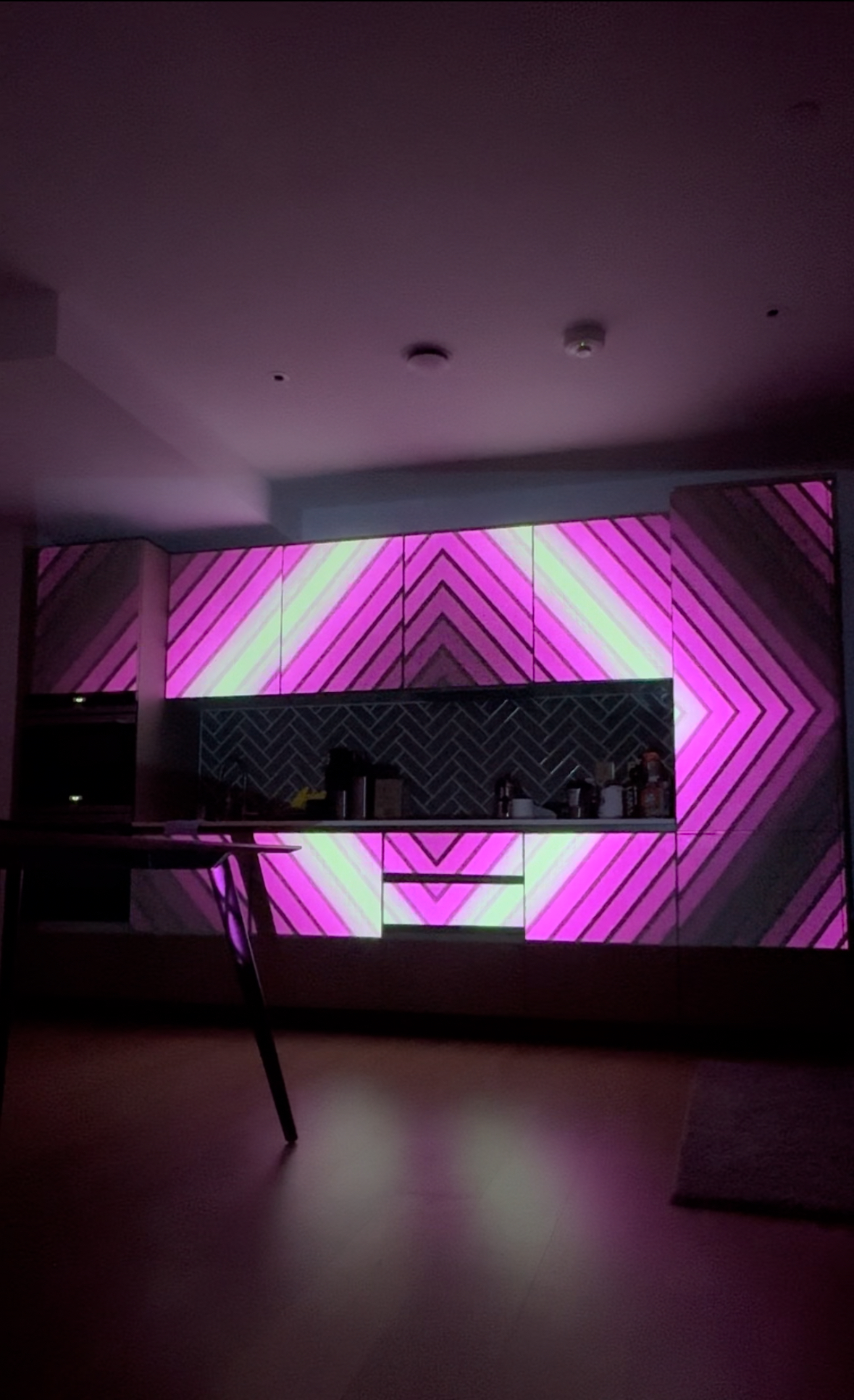
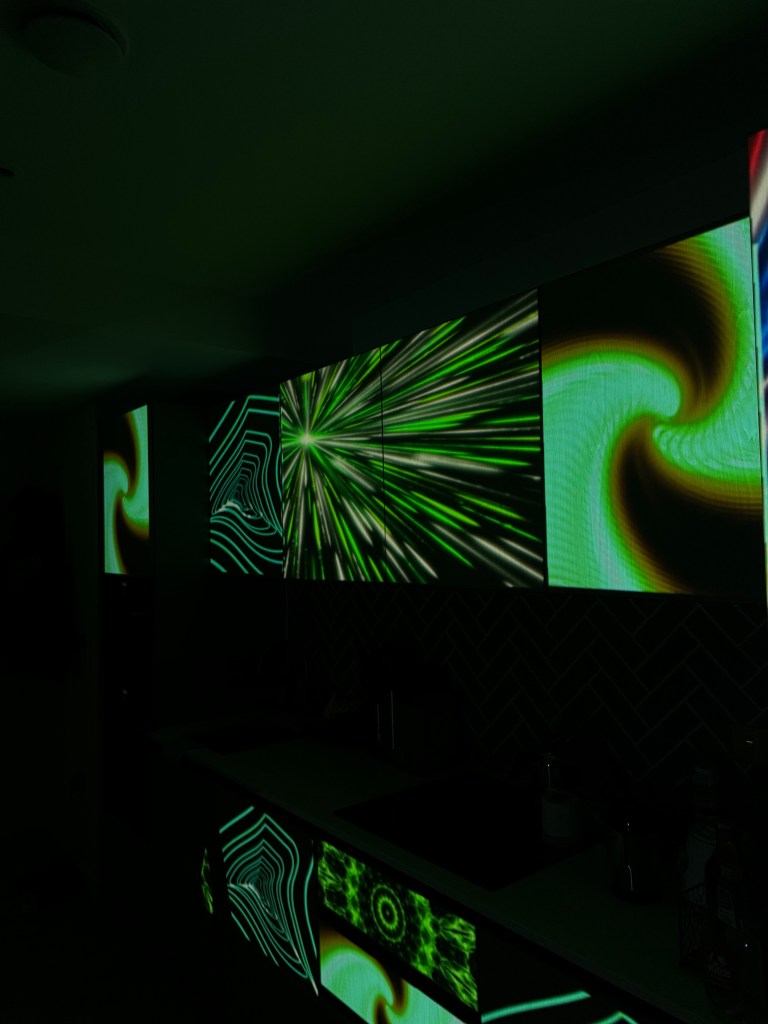
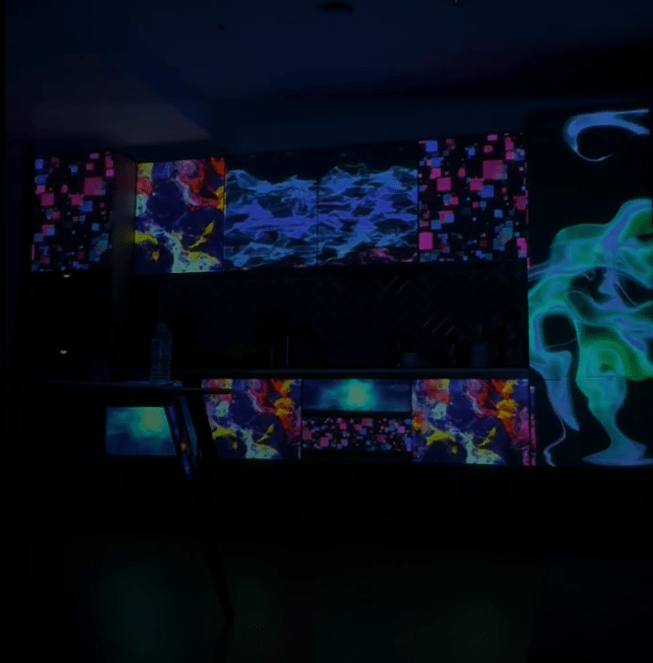
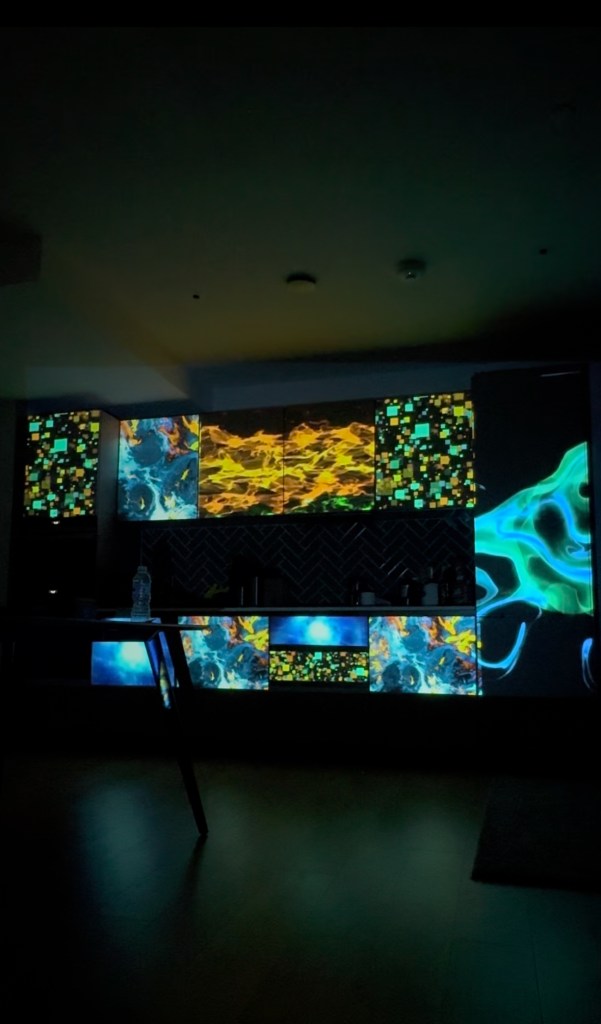
This project emphasized that projection mapping can evolve from spectacle to narrative structure—where content responds to space, not just form. It also highlighted the power of modular media systems to generate layered meaning through zone-based visual logic.
Key Outcomes:
- Used Resolume to assign discrete content to segmented spatial zones
- Developed methodology for multi-threaded ambient storytelling
- Demonstrated proof-of-concept for narrative architecture through visuals
Fragmented Realities is a spatial media experiment that reveals the narrative potential of multi-surface projection. By using everyday architecture as visual scaffolding, this project transforms a functional space into a dynamic site of parallel storytelling—a technique applicable to homes, galleries, or ambient commercial design.
It proves that projection mapping doesn’t need to be singular to be immersive. It just needs to listen to space.
 KANLIBAS STUDIO