Role
Tools
Duration
Output
Date
How can projection mapping escape the rigidity of flat walls and perfect angles? This project set out to explore organic, uneven, and living surfaces as alternative canvases—starting with tree bark, sculptural forms, and raw-textured environments. By focusing on texture, depth, and how visual forms wrap around unpredictable contours, the goal was to develop a methodology for designing projection visuals that feel integrated—not just imposed—onto the surface.
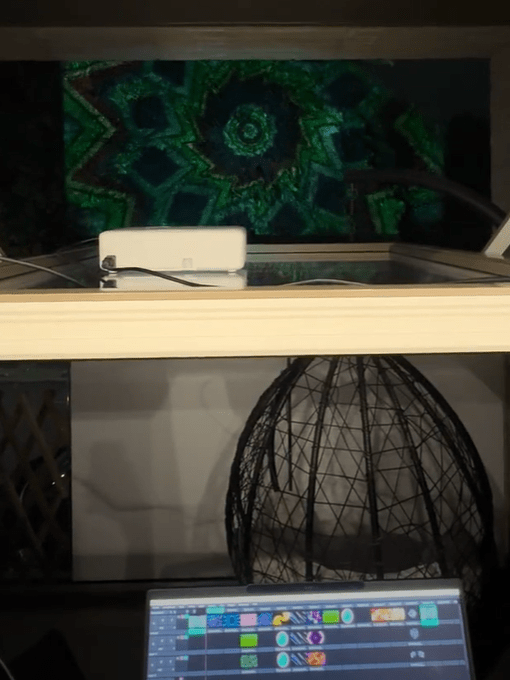
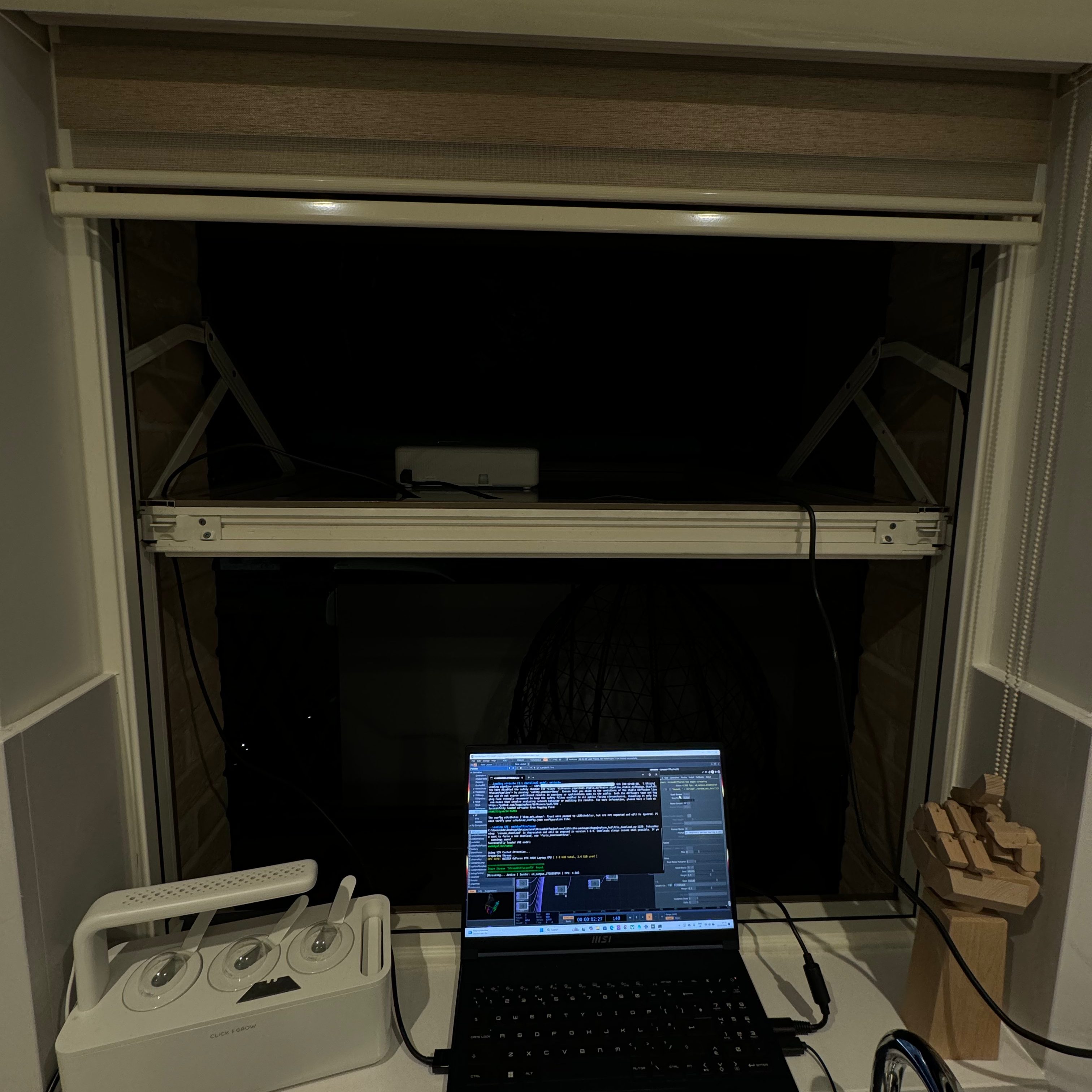
Testing brightness thresholds and projection alignment across non-flat surfaces.
Evaluating the impact of shape and surface topology on visual clarity.
Key adjustments included refining blackpoint, luminance range, and the animation detail frequency to avoid overwhelming the spesific unique surface texture.
This phase helped determine which elements “popped” visually, and which ones dissolved into the surface—making a breakthrough for later visual design principles.
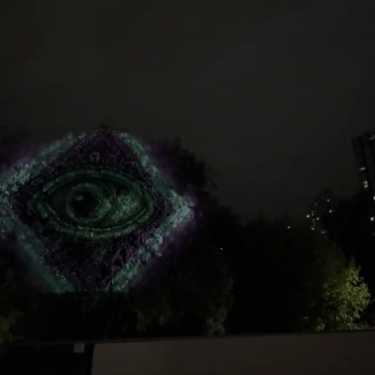
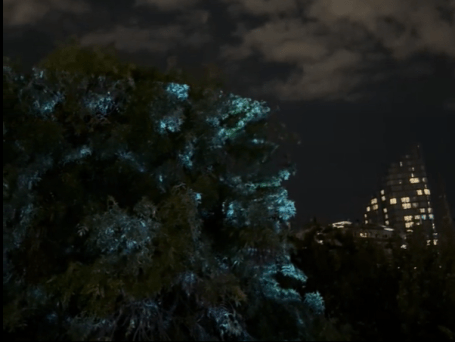

This project led to a set of visual design guidelines for mapping onto organic or complex surfaces.
I explored which visuals were effective on bark, fabric, and irregular contours—refining a process that blends visual harmony with environmental texture.
Key Outcomes:
- Calibrated projection levels for uneven organic surfaces
- Developed guidelines for high-impact visuals on textured forms
- Identified ideal animation pacing for readability and flow
- Created a portable method to test projections in outdoor environments
TouchDesigner and Resolume developed a coherent visual flow where every graphic element matched the music’s vigour, creating a seamless and engaging experience. Real-time graphic adaption to music improved audiovisual presentation. Combining these formidable tools has perks and cons. The combination provides dynamic, adjustable graphics that match music. Visual trigger lag may require further adjustment to achieve perfect synchronisation, especially in live environments.
Iterative testing showed that high-contrast colour palettes, low-frequency motion, and simple geometric complexity improve organic surface visual clarity. Uneven materials like tree bark and carved meshes showed bold outlines and rhythmic movements best. Surface curvature induced visual distortion, stressing the need to adapt compositions to content and projection environment. These findings offer a flexible design foundation for projection-based works in unconventional or natural settings.

Our work shows how projection design can adapt to nature’s complexity, creating new immersive media environments and emotive textures.
 KANLIBAS STUDIO